

(Anita Saluja)
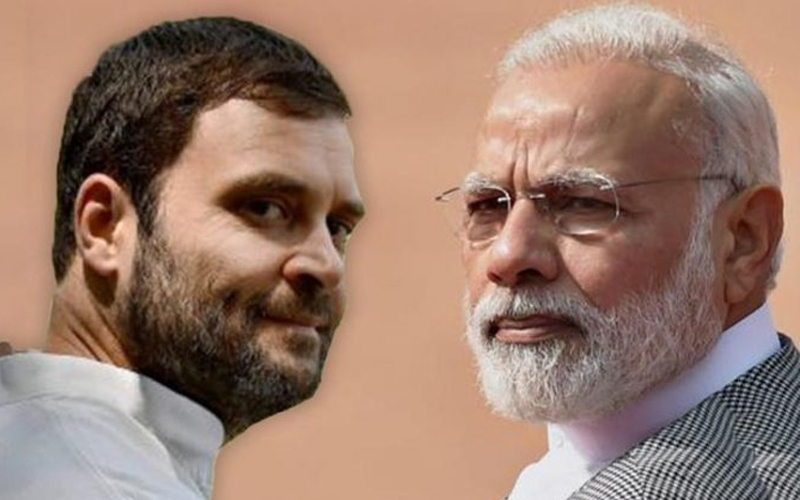
As political temperatures continue to rise in Bihar, the Ruling NDA and the Opposition Mahagatbandhan are locked in a no-holds-barred contest for the upcoming State Assembly elections. Rahul Gandhi’s Vote Adhikaar Yatra came tantalizingly close to creating a momentum, but there are issues worrying the party. Can it sustain this momentum till the polling dates, which could be held in two or three phases? Besides, can the Congress convert this popular mood into votes, given the absence of organizational machinery on the ground in the State?
Bihar Assembly elections has all the trappings of a suspense-thriller. While the Congress and the RJD are determined to wrest the political initiative, the BJP is playing it cool, leaving the Opposition guessing. The political arithmetic seems to work in favour of the NDA in Bihar. The Bihar NDA is considered a near-invincible political combination. While the BJP continues to act as a magnet for the Upper-Castes, the Extremely Backward Classes (EBCs) are under the sway of the Janata Dal-United of Bihar Chief Minister Nitish Kumar. Lok Janshakti Party (LJP) of Chirag Paswan, son of Ramvilas Paswan, commands sizeable support among Dalits. The BJP is focusing on Maha-Dalits, as well.
If this is not enough, the BJP has on its side, Jitan Ram Manjhi’s Hindustani Awam Morcha (HAM) and Upendra Kushwaha-led Rashtriya Lok Morcha (RLM). MIM leader Asaduddin Owaisi’s recent statement that he would not join the INDIA Block but contest the Bihar Assembly elections is good news for the BJP. In the Bihar Assembly elections in 2020, Owaisi’s MIM won five seats. This means MIM is able to seriously dent the Opposition’s Muslim votebank. Similarly, Prashant Kishor’s Jan Suraj Party can divide the Anti-Incumbency vote, which is bound to hurt INDIA Block and end up indirectly helping the NDA in Bihar.

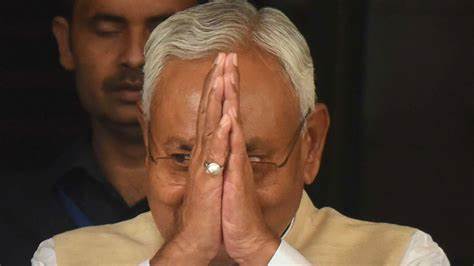
What is indeed a cause for worry for the BJP is Bihar Chief Minister Nitish Kumar keeping a low profile. It remains to be seen to what extent it would impact the elections outcome. Prime Minister Narendra Modi continues to lead the charge against the Opposition Congress-RJD combine in Bihar. In fact, the BJP did manage to neutralize RJD leader Lalu Prasad Yadav nearly two decades ago. Lalu Yadav merely depended on Muslims-Yadavs (MY) combination, failing to expand his vote bank. The RJD is still in no position to expand its votebase in Bihar.
The Congress, on the other hand, is working hard to get its act together. Earlier, the Congress vote bank comprised of Brahmins, Dalits and Minorities. Following the Babri Masjid Demolition on December 6, 1992, the party suffered an irreparable three-way split, with Brahmins moving over to the BJP, Dalits to the BSP and Minorities to the Third Front parties.
Rahul Gandhi is making efforts to not only revive the party’s votebank, but to strengthen and expand it, with the inclusion of OBCs, through the Caste Census Agenda. In Bihar Assembly elections, this strategy could pay him political dividends.
Rahul Gandhi has plunged headlong into Bihar Assembly elections campaign. He has succeeded in setting the political narrative, forcing the BJP on the back foot. In fact, the Caste Census Agenda of Rahul Gandhi goes beyond the Mandal politics of former Prime Minister V P Singh in 1990, which was limited to OBCs. This time round, Rahul Gandhi has carefully orchestrated a political campaign to bring together Dalits, Adivasis, OBCs and Minorities, accounting for 90 per cent of the population, as a formidable force.
Besides, he has raised the issue of representation of the weaker sections in the decision-making processes. All of these elements make his social justice plank more appealing and constitutes a vision to really empower the weaker sections of the society. An old aide of veteran Socialist leader Sharad Yadav, Anil Jaihind Yadav, was roped into the Congress and appointed as AICC OBC Department Chairman. He has been given the task of wooing more EBC groups in Bihar.
Rahul Gandhi has taken care to focus on organizational revamp and rejuvenation, as well. In the past, AICC In charges for Bihar capitulated to RJD supremo Lalu Prasad Yadav, allowing him to decide not only the Congress candidates, but from which seats they would contest. After trying out the likes of Mohan Prakash, Bhakta Charan Das and Shakti Singh Gohil, Rahul Gandhi finally handpicked his trusted man, Krishna Allavuru, for the job.
By choosing Krishna Allavuru as AICC Incharge for Bihar, Rahul Gandhi has signaled that important decisions in the Congress will be taken by the party and not by an outside person or agency. Krishna Allavuru extensively toured Bihar, in a bid to galvanize the party organization. The firebrand leader Kanhaiya Kumar took out a Padayatra for the same purpose.
Rahul Gandhi packed the Congress Screening Committee for Bihar with his trusted persons. This panel screens, shortlists and makes recommendations to the Central Election Committee that finally decides on the candidates. AICC Treasurer Ajay Maken, a confidante of Rahul Gandhi, has been named Chairman of the Screening Committee.
Two of its most important members are two MPs, one from Lok Sabha and the other from the Rajya Sabha. Praniti Shinde from Lok Sabha, a young Dalit leader, besides Imran Pratapgarhi from Rajya Sabha, who heads the AICC Minorities Department, are expected to play a key role in the selection of candidates. Another member is Kunal Choudhary and the rest are ex-officio members.
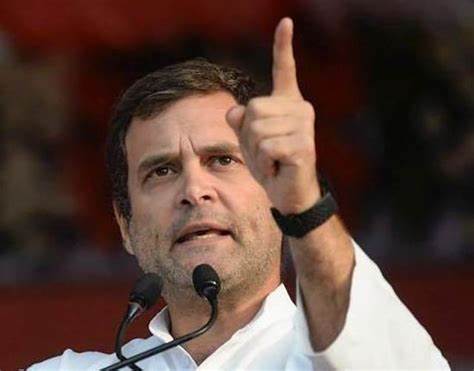
Rahul Gandhi in the past had earned the dubious distinction of being part-time politician. For the first time now, he has converted himself into a full-time politician, signaling that he is in command of the situation. How much this transformation will impact the Bihar elections outcome remains to be seen.
Since the 243-member Bihar Assembly term ends by November 22, the new House has to be constituted before that. The Election Commission has to factor in Diwali on October 20 and Chhath Pujan between October 25-28 while announcing the election schedule.

(Writer is Delhi-based Senior Journalist and Political Commentator. Views are personal.)