

The Economy, the Phillips Curve and a Restless Gen Z
(Dr Pentapati Pullarao)
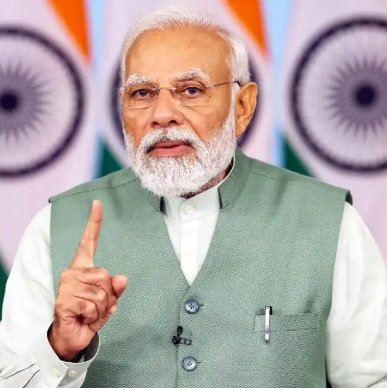
Prime Minister Narendra Modi’s immediate challenge is no longer simply to keep India’s growth rate high. It is to make the economy work for all and allow people to feel that they are not marginalised. Even if a person earns one lakh a month, he may feel marginalised if others are earning much more. The steady rate of growth since Modi became Prime Minister in 2014 has created lakhs of crorepaties. This has also caused feelings of insecurity among others.
When the BJP won the Bengal election on May 4, 2026, and a major political opponent, DMK’s Stalin, lost Tamil Nadu, that should have given Prime Minister Modi enough momentum to coast along till 2029. But sudden events created challenges. One might say that when the USA-Iran war started on February 28, 2026, the challenge began for the government. This is because prices started rising and joblessness increased. Moreover, the advent of AI (Artificial Intelligence) has also caused losses of good-paying jobs in lakhs. All these problems have created a “perfect storm” for Modi.
India remains one of the world’s fastest-growing major economies, but the employment story is considerably less impressive. Youth unemployment remains substantially high and underemployment have become particularly sensitive political issues. Recent Gen Z-led protests over examination irregularities demonstrated how quickly a specific grievance can become a wider revolt against the system.
This is the central economic challenge for Modi over the next year: India needs more jobs without losing control of inflation.
The Phillips Curve dilemma
In economics, there is a great theory proposed in 1958 by Prof. A.W Phillips, called the Phillips Curve—which says that lower unemployment can come with higher inflation, but lower inflation can mean more unemployment. The Phillips Curve is a difficult economic trade-off. If the government reduces inflation, employment may suffer. But to create more employment, prices may rise. That is the biggest problem facing governments, and Narendra Modi now faces it.
Modi requires a wizard or genius like Manmohan Singh to solve this puzzle. There is little evidence that Modi has found such an economic genius till now.
Gen Z and the new anti-incumbency
The political danger is that India’s young people may judge the economy differently from economists. An increase in GDP means little to a person unless he benefits. The recent youth protests suggest the emergence of a new form of Gen Z anti-incumbency—less ideological, more impatient and heavily driven by social media. Modi’s announcement of AI training for 10 million young people and free online coaching is an acknowledgement of the problem. But the test will be outcomes: jobs, fair examinations, mobility and income.
2027: the electoral stress test
The seven state elections scheduled for 2027—Uttar Pradesh, Gujarat, Punjab, Uttarakhand, Himachal Pradesh, Goa and Manipur—will provide the first major political test of whether economic and youth dissatisfaction is translating into electoral behaviour.
For Modi and the BJP, Uttar Pradesh and Gujarat will be particularly important politically. The BJP will also have to do well in every state. The morale of the BJP will depend on how well Modi urgently handles the economy in the face of rising oil prices.
Shift to younger generation in BJP
There are serious efforts by Narendra Modi to bring younger people to power. But the danger is that their inexperience may create problems. A good example is the Congress party, where the removal of senior leaders has not brought the dynamism needed for victories.
Affordability: The Biggest challenge to Modi
The new challenge across the developed world, including the USA, is “Affordability.” India’s next economic challenge is not simply inflation; it is affordability. A family can have an income and still feel poorer if wages, especially for younger workers and the lower middle class, are not rising fast enough to cover living expenses. This is where the political consequences of economic policy become visible. Growth may be strong, but if disposable incomes remain squeezed, the average voter may not experience that growth as prosperity. Affordability is the biggest challenge for Modi and all politicians across the world.
Modi therefore needs to focus on real purchasing power, not just GDP. The answer is not direct cash transfers or freebies. It means building a nearly perfect economy where there is high GDP growth and, at the same time, “affordability for the people.” People may have jobs, but they should not feel poorer. High taxes, GST and inflation may partly reflect an over-emphasis on huge investment in infrastructure. Maybe it is time for Modi to reduce such expenditure and focus on affordability and carefully lower taxes.
The government must make the cost of living a central economic indicator—because for voters, what they can afford matters more than what GDP can measure.
Modi is not unpopular
Modi is not an unpopular leader. But people want a better economy, or they may forget national security, foreign victories, pride in the nation and everything else. That is the way the world works.
Modi and the BJP
Modi and the BJP can win political battles. But can Modi tackle the “Curse of the Phillips Curve”? The economy is not simple to handle when oil prices rise. Can Modi meet the economic challenge? If Modi improves the economy, then the other problems are very minor.
(Author is a Political Analyst based at New Delhi)