

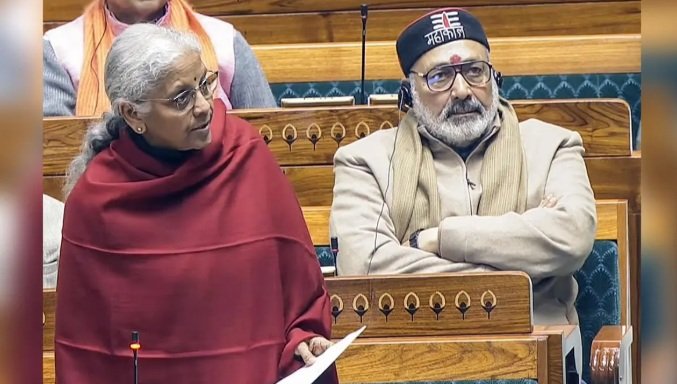
(Dr. M. A. Malik)
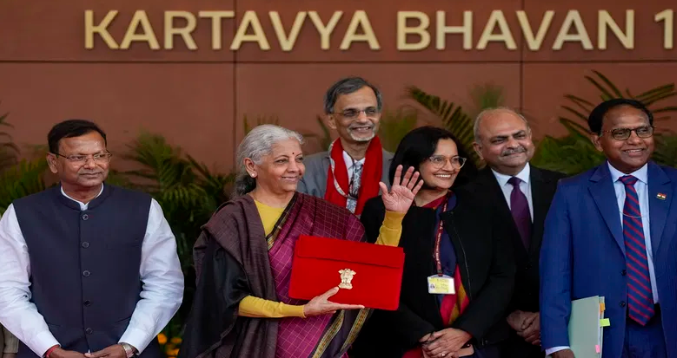
The Government of India on 1st February (Sunday) 2026 presented the Union Budget 2026-27, laying out the financial blueprint for the country’s socio-economic priorities for the coming fiscal year. The Budget, described by the finance minister as a roadmap for Viksit Bharat, balances ambition and fiscal discipline while attempting to deliver on inclusivity and growth.
The Union Budget is India’s annual statement of receipts and expenditures, serving as the primary instrument for fiscal and social policy. It directs public funds towards welfare, infrastructure, human development, and strategic sectors in line with national goals.
Setting the Macroeconomic Stage
In numerical terms, the total estimated expenditure for 2026-27 is about ₹53.47 lakh crore, which represents the aggregated fiscal support the government intends to provide across all ministries and schemes. In this, the total receipts (excluding borrowings) are projected at ₹36.5 lakh crore, with net tax revenue expected to be around ₹28.7 lakh crore. The budget sets gross market borrowings at approximately ₹17.2 lakh crore, indicating reliance on debt markets to bridge the gap between receipts and outlays. The fiscal deficit is targeted at 4.3 per cent of GDP, a modest reduction from the 4.4 per cent target of the preceding fiscal year, reflecting the government’s focus on fiscal consolidation while promoting growth.
By comparison, the 2025-26 Union Budget projected a total expenditure of ₹50.65 lakh crore, an increase of around 7.4 per cent over the 2024-25 revised estimate. Its fiscal deficit was set at about 4.4 per cent of GDP, down from 4.9 per cent in 2024-25, signalling a trajectory of disciplined fiscal management over the last two years.
When viewed in a longer historical context, fiscal discipline has been a consistent, though evolving, theme in India’s budgetary planning. During the pre-BJP years (2004-2014), fiscal deficits averaged around the 4-5 percentage of GDP, shaped by welfare priorities and global economic pressures. Under the BJP-led period from 2014-24, the government pursued structural reforms, including the implementation of the Goods and Services Tax (GST) and increased capital expenditure, while also enduring fiscal strains from global shocks like the COVID-19 pandemic. This decade saw deficit targets fluctuate but with an overall trend toward moderation.
Inclusive Development: A Critical Appraisal
A Budget’s true test lies not only in aggregate targets but in its impact on vulnerable groups such as Scheduled Castes, Scheduled Tribes, Other Backward Classes, minorities, rural workers and informal-sector earners. These populations, historically disadvantaged by structural inequities, rely heavily on targeted public spending and social schemes.
Scheduled Castes and Scheduled Tribes
Over successive budgets, allocations for SC and ST development have remained a key concern for equity advocates. In the 2025-26 context, available data from state estimates showed that combined provisions for welfare of SCs, STs, BCs and minorities amounted to ₹72,397 crore, up from ₹62,383 crore in 2024-25, reflecting increased emphasis on constitutional social justice commitments at least in some regions.
However, the 2026-27 Budget documents do not yet provide a consolidated line-item breakdown for these groups at the same level of granularity, suggesting that, while broad social sector allocations have risen, targeted tracking remains dispersed across ministries. Aggregated targets such as scholarships, skill development and welfare schemes exist but require close monitoring of execution to ensure communities benefit as intended.
Other Backward Classes and Minorities
Parallel to SC/ST allocations, funding streams for OBCs and minorities including educational scholarships, enterprise support and social welfare initiatives have been subject to year-on-year fluctuations. Independent analyses ahead of the 2026 Budget raised concerns that certain minority scholarship components were under strain or not significantly revived after stagnation, highlighting a potential area of policy oversight.
Where historically the Ministry of Minority Affairs has received modest increases, analysts underscore the need for enhanced targeted investment, particularly in education and employment schemes that tangibly improve access for minorities.
Working Sections and Rural Livelihoods
A distinctive feature of the 2026-27 Budget is its focus on rural employment and livelihoods. While the iconic Mahatma Gandhi National Rural Employment Guarantee Act (MGNREGA) continues with an allocation of ₹30,000 crore, a new flagship programme VB-RAM-G (Viksit Bharat-Guarantee for Rozgar Aajeevika Mission – Grameen) has been introduced with substantially higher resources of ₹95,692.31 crore to broaden rural job opportunities. This marks a strategic attempt to transition from traditional schemes to a larger, possibly more encompassing employment paradigm for rural workers.
While some critics argue that shifting funding emphasis to VB-RAM-G may impose additional fiscal burdens on states and potentially dilute the established efficacy of MGNREGA, others see this as an innovative step toward sustainable rural livelihoods that combine employment guarantees with enterprise development.
Regional Discourse
Within this regional discourse, Telangana and Andhra Pradesh present particularly instructive cases. Telangana, since its formation, has prioritised irrigation expansion, rural livelihoods, IT-driven industries and urban infrastructure. Yet, the Union Budget 2026-27 offers limited dedicated support to large ongoing commitments such as the financial burden of lift-irrigation power subsidies, urban transit expansion in Hyderabad or targeted incentives for its fast-growing biotech and pharmaceutical clusters. Andhra Pradesh, meanwhile, continues to struggle with revenue deficits, incomplete infrastructure such as the Polavaram project, and the challenges of capital-region development. The 2026-27 Budget increases overall capital expenditure nationally, but its distribution has not resulted in a commensurate uplift for either Telugu state, both of which have appealed for enhanced central funding tied to ongoing infrastructure and irrigation requirements. The coastal and port potential of Andhra Pradesh, which can catalyse national exports, has also received only incremental rather than transformative funding.
Southern states, including Telangana and Andhra Pradesh, also outperform northern states in health outcomes, education access and digital governance. However, the higher efficiency and better baseline standards do not translate into favourable central allocations proportional to their development aspirations. These regional disparities underline the need for a more balanced fiscal framework that integrates demographic justice with performance-based incentives.
Such asymmetries raise fundamental questions about the inclusiveness of national budgeting: Can India achieve the goal of Viksit Bharat if regional disparities deepen? Can states be expected to maintain high-quality public services and competitive industrial ecosystems without equitable federal support? These issues demand consideration beyond annual budget cycles and call for rethinking federal fiscal design.
Education: Investing in Human Capital
The Education sector in the 2026-27 Budget commands an enhanced allocation of ₹1,39,289 crore (approximately), a notable rise compared with the ₹1.28 lakh crore allocated in the 2025-26 Budget. This reflects sustained emphasis on strengthening education infrastructure, expanding access and linking education more directly with employability.
The increase in education spending is aimed at areas including digital integration, vocational pathways and girls’ hostels across districts initiatives intended to increase participation from marginalised communities. This uptick is significant when compared with 2024-25 trends, where education saw more constrained growth, underlining the rising priority assigned by policymakers.
Health: Towards Inclusive Well-Being
For the Health sector, the 2026-27 Budget assigns around ₹1,04,599 crore, again higher than the preceding year’s allocations. Investment in health infrastructure, regional medical hubs, maternal and child health services and preventive care are central to this increased funding.
Over the last three years, health allocation has progressively increased sectoral capacity, yet remains a smaller share of total expenditure relative to needs, especially for vulnerable demographics dependent on public healthcare systems.
Agriculture and Rural Development: Addressing the Heartland
Agriculture remains a cornerstone of the Indian economy and a critical pillar for inclusive growth. The 2026-27 Budget earmarks ₹1,62,671 crore for agriculture and allied activities, about 7 per cent higher than the ₹1,51,853 crore allotted in 2025-26. This reflects continued support for high-value crops, allied sectors and technology adoption aimed at boosting rural incomes and food security.
When rural development allocations such as roads, irrigation and livelihood programmes are combined, the broader push for reducing rural-urban disparities becomes more significant.
Industry, Services and Infrastructure: Linking Growth with Jobs
The Government’s commitment to capital expenditure stands out in the 2026-27 Budget, with ₹12.21 lakh crore set aside for infrastructure outlays, up from about ₹11 lakh crore in the revised estimates for 2025-26. These investments in transport, defence, energy and industrial corridors not only aim to expand physical capital but also generate employment across sectors.
Compared historically, this emphasis on infrastructure is consistent with recent trends under the BJP-led budgets (post-2014), which have progressively increased capex to stimulate economic activity and integrate regions into national growth networks.
Fiscal Discipline and Macroeconomic Signals
The targeted 4.3 per cent fiscal deficit reinforces the government’s focus on macro-economic stability. This represents a gradual narrowing from 4.4 per cent in 2025-26 and back from higher deficit ratios seen in post-pandemic years. Fiscal discipline, when coupled with strategic spending, helps maintain investor confidence and manage inflationary pressures.
However, credit rating agencies have described the 2026-27 Budget as “tactical, not breakthrough,” noting that while fiscal metrics improve slightly, they may not suffice to significantly alter India’s broader credit profile or dramatically expand manufacturing’s share of GDP without deeper reforms.
Conclusion
The Union Budget 2026-27 presents a comprehensive developmental canvas with rising allocations in education, health, rural livelihoods, agriculture and national infrastructure. It demonstrates fiscal stability, continuing consolidation and a commitment to welfare. Yet, its inclusivity whether for SCs, STs, OBCs, minorities, workers or regions ultimately depends not only on aggregate spending but on equitable distribution and effective utilisation.
While the Budget makes progress in human capital and rural development, its regional imprint reveals persistent structural imbalances. Northern states benefit disproportionately from demographic-weighted transfers, while better-performing southern states, including Telangana and Andhra Pradesh, continue to receive allocations that do not fully match their contribution to national economy nor their developmental needs. Without a calibrated approach that recognises efficiency, performance and state-specific challenges, India risks deepening regional inequalities even as it aspires for national transformation.
For the promise of Viksit Bharat to translate into reality, future budgets must integrate regional inclusiveness as a core principle. True inclusive growth is achieved not merely by increasing sectoral allocations but by ensuring that every region from the Gangetic plains to the Deccan plateau advances with equal dignity, opportunity and fiscal justice. The Budget 2026-27 sets the stage, but the road to equitable development demands a more region-sensitive, performance-aware and partnership-driven federal fiscal framework.
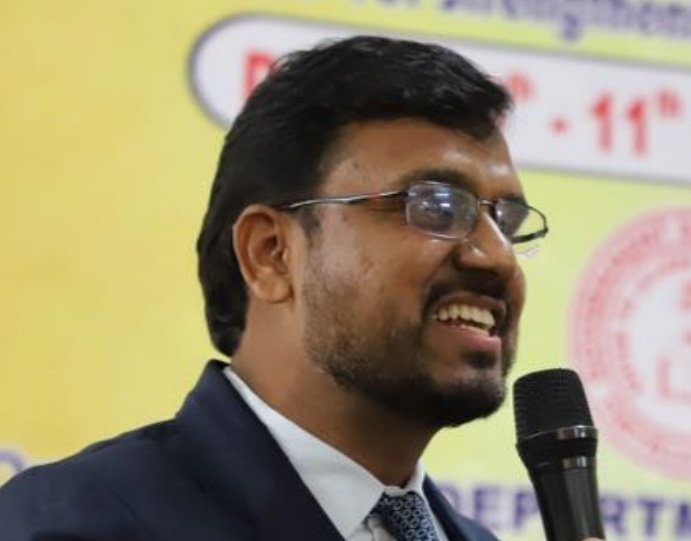
Author is Associate Professor of Economics, Collegiate Education, Telangana (working at Government Degree College, Chevella, Ranga Reddy District)
Excellent analysis, read to understand the features and inclusivity of Budget 2026-27
Heartfelt appreciation to Dr. M. A. Malik Sir for his excellent and insightful presentation. The article reflects deep research, clarity, and academic excellence. It was truly informative and inspiring for the Principal, staff, and students. Such contributions greatly enrich our learning environment. We look forward to more enriching sessions in the future.
I have gone through this article written by an erudite scholar Prof Abdul Malik. This article is very informative because many points have been covered which I could know by reading this. Heartiest congratulations to Prof because within a few hours of presenting the budget he has written the article and editor has published the same.
A well-researched and balanced analysis that clearly links fiscal policy with inclusivity and regional balance—insightful and timely.
2026-27 Budget at a Glance………
Emphasizes infrastructure-led growth, self-reliance in manufacturing, expansion of services, development of human capital, and targeted reforms in taxation and technology, while maintaining fiscal prudence.
Prof K Srinivasa Rao